News

INTERNATIONAL WOMEN’S DAY

Demonstrations are planned from Tokyo to Mexico City, to celebrate International Women’s Day, with this year’s theme calling to “Accelerate Action.” This comes at a time where many activists worry that the current political environment may result in a backsliding on many of the rights they’ve long fought for. One in four countries reported a backlash against women’s rights last year, according to U.N. data.

International Women’s Day was first celebrated in the USA in 1909 and internationally in 1911.

While equality for women has come a long way, we still have some key areas outstanding. Political representation is an area that needs to be addressed. In Ireland, of our 160 TD’s only 36 are women, only one in five.

Women still form the largest percentage of those in low paid insecure jobs, they form the majority of people giving care both paid and unpaid. We are all aware of just how inadequate income in this area of work is. Recently, on RTE’s Liveline, we listened to the heart-breaking stories told by people who are still actively caring for a family member but on receipt of their state pension their care’s allowance was cut or stopped.

During the debates in the run up to the last election (November 2024) we heard a lot of discussion on crime and crime on our streets. No doubt,  this issue is very important and needs change, however the issue of crime within the home was rarely mentioned. Domestic violence within the home is as much a crime, accounting for more deaths than those though gangland killings. The Gardai receives between 500- 600 calls per week relating to domestic and sexual violence within the home.

All to often women still have no where to go, if they leave the family home due to violence. A housing crisis and with only one third of the required refuges to accommodate women and their children mean that many women stay in unsafe and violent homes.

Yesterday in Nerja, Spain I spoke to a group of older people calling for equal rights for women and I asked what prompted them to engage with this issue. “ Very simple” they said “ women still have not got access to full equality”

The theme ‘accelerate action’ requires us all to examine how we support equality for women and where we can take action or offer support on a practical level.

News In Brief – February 2025

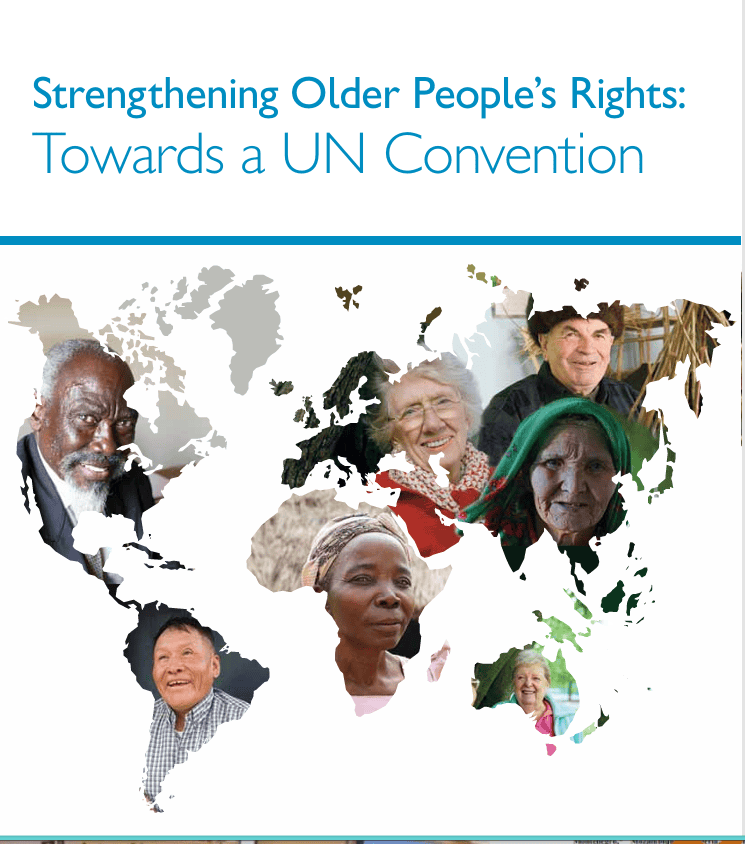
Convention on the Rights of Older People

The Irish Senior Citizens Parliament supports the call from a range of NGO’s across Europe calling for a Convention on the Rights of Older People

Older persons are often forgotten and left behind, but they have much to contribute to our societies, and it is crucial to promote a wider understanding of their role in order to build a society for all ages. (Rosa Kornfeld-Matte UN Independent Expert on the enjoyment of all human rights by older persons)

Europe is experiencing a significant demographic shift as its population ages rapidly. The proportion of individuals aged 65 and over is on the rise, and this trend is expected to continue in the foreseeable future. This shift prompts us to consider how older individuals exercise their rights within contemporary society and presents new challenges that our communities must be prepared to address.

Population ageing is one of the most profound transformations of our time. For the first time in history, the global population is projected to have fewer children than older individuals. Currently, approximately 700 million people, or 10 percent of the world’s population, are over the age of 60. Projections indicate that by 2050, the number of older individuals will double, reaching 20 percent of the global population. This reality underscores the necessity of enabling older persons to remain integrated into society and actively participate in the formulation and implementation of policies that impact their lives and well-being.

Speaking at the launch of the Handbook of Rights for Older people Marjan Sedmak (AGE Platform Europe President) said Maintaining and enhancing our basic European values of respect, solidarity and equality should remain the main priority guiding all EU external and internal actions. Respect and enjoyment of ones’ human rights by all individuals is a fundamental feature of our democratic societies. The right to be respected and treated with dignity, to take part and be included in society may look fairly natural to some people, but can be a real challenge for some parts of our ageing population. And this is all the more true in these tough economic times, when fundamental rights tend to be overshadowed by economic concerns.

Human rights are entitlements and freedoms of all human beings, whatever our nationality, place of residence, sex, age, national or ethnic origin, colour, religion, language, or any other status. Human rights are held by all persons equally and universally. They are based on core principles like dignity, fairness, equality, respect and autonomy. Human rights are present in our day-to-day lives and protect our freedom to control the different aspects of our own lives. (HANDBOOK HUMAN RIGHTS AGE PLATFORM)

Human rights are enshrined and protected by law, encompassing international treaties as well as national constitutions and legislation. The first global acknowledgment that all human beings possess inherent rights was established following World War II with the adoption of the Universal Declaration of Human Rights (UDHR) by the United Nations in 1948.

Following the adoption of the UDHR, numerous countries have ratified various human rights treaties, which outline the obligations of governments to act in specific ways or to refrain from certain actions in order to promote and protect the human rights and fundamental freedoms of their citizens. Collectively, these treaties form what is known as international human rights law.

By accepting the provisions of these treaties, states incur legal responsibilities to ensure that all individuals within their borders can enjoy these rights and to provide remedies in cases of violations. International human rights law establishes clear obligations for governments, holding them accountable to the international community and providing mechanisms for measures and sanctions against any state that fails to meet these commitments.

Older individuals are often overlooked within the existing international legal framework. Currently, there are no universally applicable international standards that can guide the development of legislation aimed at protecting the rights of this demographic. Consequently, the present international legal framework is fragmented and lacks the comprehensiveness needed to effectively address the specific protection gaps that hinder older persons from fully enjoying their human rights.

A single instrument is needed to amalgamate the principles of older person’s rights into one convention. (HelpAge Briefing Paper)

A Report of the Office of the United Nations High Commissioner for Human Rights states

(Summary document of the multi-stakeholder meeting on the human rights of older persons)

  1. States should, in collaboration with civil society, national human rights institutions, the United Nations and older persons themselves, develop and adopt a comprehensive convention on the human rights of older persons that builds on existing rights and regional instruments.

This convention seeks to enhance the quality of life for older adults. Similar to previous U.N. conventions addressing the rights of women, children, and persons with disabilities, it is expected to positively impact the targeted population. Specific initiatives may include economic empowerment through the establishment of rights to an adequate standard of living, work, education, and access to health and long-term care services.

Furthermore, the convention will define the responsibilities of ratifying member states with respect to older adults and will strengthen existing laws with clear and precise language. It will mandate rights to accessibility, information, and judicial protection.

In addition, it will enshrine the right to healthcare, mental health services, essential medications, and social services for older individuals.

The convention will promote dignity by safeguarding the right to privacy, freedom from abuse and violence, and physical security. It will also ensure that subgroups, including LGBTQ+ elders, older adults with disabilities, and Indigenous elders, are included and guaranteed the same rights.

Finally, the convention will provide policymakers with a comprehensive framework for developing effective policies concerning older adults, encourage data collection on elder populations, and assist governments in resource allocation. Ultimately, it aims to inspire and justify additional programs that enhance quality of life as individuals age.

ISCP know that the Convention on Rights for Older People is not a panacea for all discrimination, however it is a forceful step in the right direction.


FAIL TO PLAN, PLAN TO FAIL

A vibrant scene at the Irish Senior Citizens Parliament promoting active aging and senior engagement.

FAIL TO PLAN, PLAN TO FAIL

“In just twenty years from now, in 2044, there will be 757,000 more people aged 60 and older, including 252,000 more people aged 80 and older.  (Age Action Nov 2024)

Now that the dust has settled on the General Election and all the horse trading has been completed, it will be interesting to see what the Programme for Government contains in terms of addressing the needs of an ageing population.

Over the course of the election campaign, many of our members referenced the lack of discussion on policies to address the long term issues relating to this.

The Irish Fiscal Advisory Council has said in a new report that Ireland’s “rapidly” ageing population is at the forefront of the many future challenges facing the State.

Ireland currently lacks the necessary public services to adequately address its healthcare needs. The challenges associated with the construction of the Children’s Hospital, along with the ongoing difficulties in recruiting and retaining hospital staff, highlight this as a significant concern.

Added to this is Ireland’s historically relatively low levels of public investment. The impact of insufficient investment is particularly evident, in healthcare, housing, aging water infrastructure, the limited availability of a robust rural broadband network, and deficiencies in public transportation.

The ongoing issue of a secure and adequate state pension still needs to be addressed. The Roadmap for Pension Reform 2018–2023 contained a commitment to a state contributory pension payment of no less than 34% of average earnings. This was NEVER IMPLEMENTED. The then Government repeatedly indicated this benchmark as the minimum adequate payment for the state contributory pension. In the recent election campaign both Fine Gael and Fianna Fail committed to increasing the pension to €350. This should be connected to a percentage of earnings, specifically 34% or higher of the average earnings.

No other party other than the Labour Party, referenced the need for an  ageing strategy. However, Fine Gael committed to a Commissioner on Positive Ageing.

Speaking on this issue, Pat Mellon (CEO ISCP )“as older people we are all too aware of the impact of lack of planning, we need to engage with the Government and actively seek policies now to address what could be a disaster for our adult children. Our members have adult children in their 30’s,40’s, & 50’s who are trying to buy a home, not  able to afford private healthcare and certainly concerned as to their ability to contribute in any meaningful way to a pension income beyond the state pension. It is this generation that will be most impacted by lack of effective planning. We need to act now”