
News
Are the Backbencher TDs trying to mislead older voters?
€20 increase in the pension in Budget 2024/25, pushed by backbench TDs to win over older voters before the upcoming General Election (Irish Independent 31st July 2024)
It was interesting to read this article in the Irish Independent last week as we approach the ‘kite flying’ in the run up to the Budget and indeed a possible election. The ISCP was struck by the lack of awareness among some TD’s and indeed the Government itself as to the increase that will be required to take those living on the state pension above the poverty line. The CSO SILC 2023 show 13.1% of the population, were at risk of poverty. In other words, they had an income that was less than 60% of the median disposable income, that is €15,754 per annum or €301.91 per week. By age group, the largest year on year change in the at risk of poverty rate was in persons aged 65 or over, up from 11.9% in 2021 to 19.0% in 2022. By household composition, the at risk of poverty rate was highest in one adult households with one adult 65 years and over at 33.6%.
The comments by the backbenchers relating to ‘winning over’ older voters are what has led us to the ad hoc approach to pension provision and indeed to how older people are viewed. Offering a ‘fiver’ in some budgets reflects a lack of understanding of the need for a secure and consistent income for older people. These beliefs and views among politicians greatly influence how policies are developed and how they appear in government actions and decisions.
The state pension helps many people avoid poverty and is important for ensuring our dignity and independence as we grow older. However, many of our members express concerns about possibly losing some of these benefits or having them reduced, which causes a lot of stress and takes away the feeling of security that we should have in our later years. These voices need to be heard as part of the policy debate on secure income and to encourage more emphasis on human dignity and human rights in every age. Speaking about income adequacy, ISCP refer to a level of income that enables people to have full participation and be fully included in society.
Advocacy amplifies the voice of the most vulnerable, who are often ignored, and provides evidence to decision-makers to change the way they act. (EAPN)
We need to remind the backbenchers of this Government and indeed all politicians who are concerned as to winning over the older voter that 60+ population is expected to reach 20 per cent of the global population by 2030, whereas in the EU the 50-plussers already represent more than 30% of the population.
We also need to remind them that it was their policy that committed to delivering a pension income linked to 34% of the average income and anything less than a €27.50 adjustment in core social welfare rates will be a real term cut (EAPN 2024)

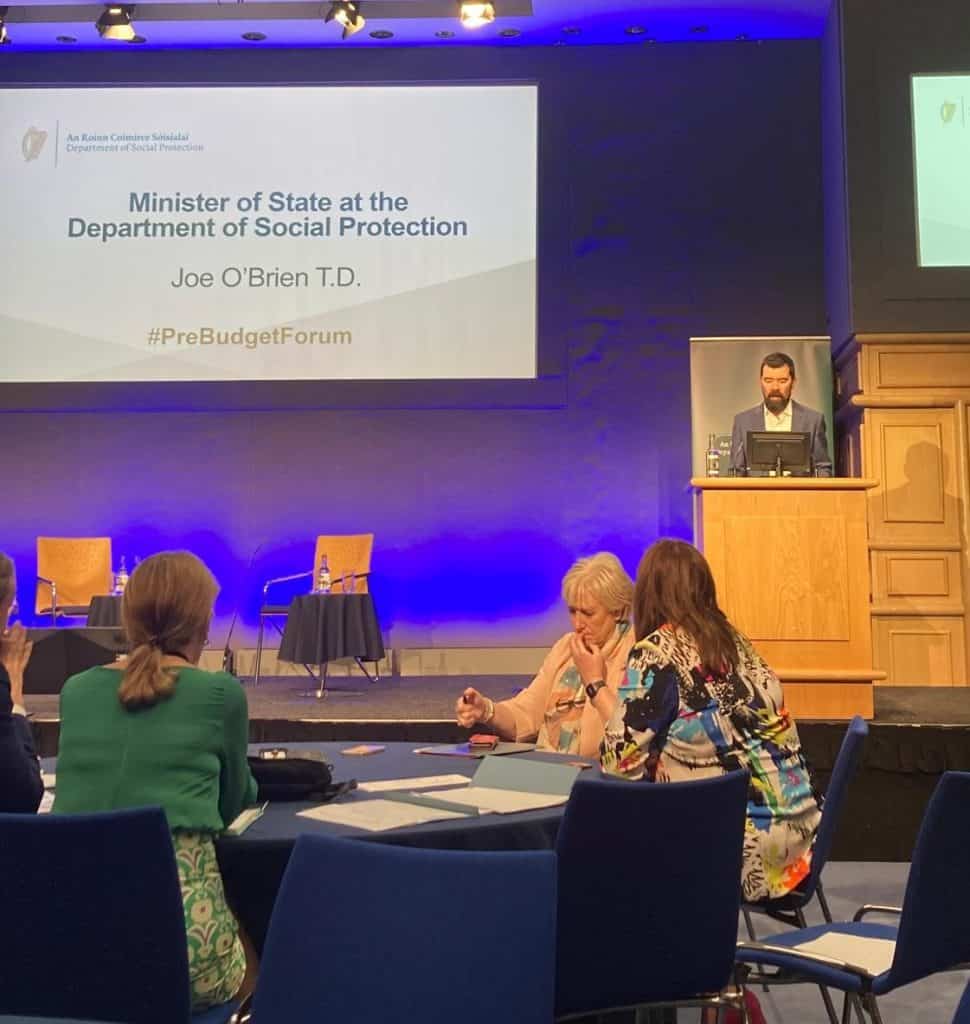
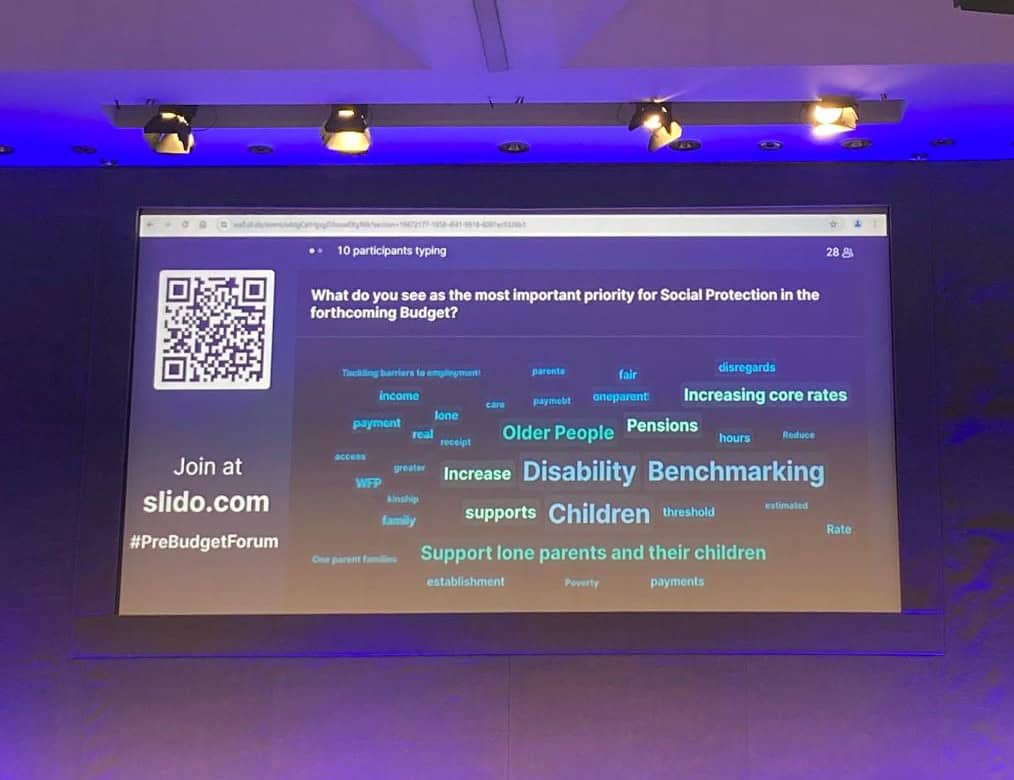
2025 Pre-Budget Forum with Department of Social Protection
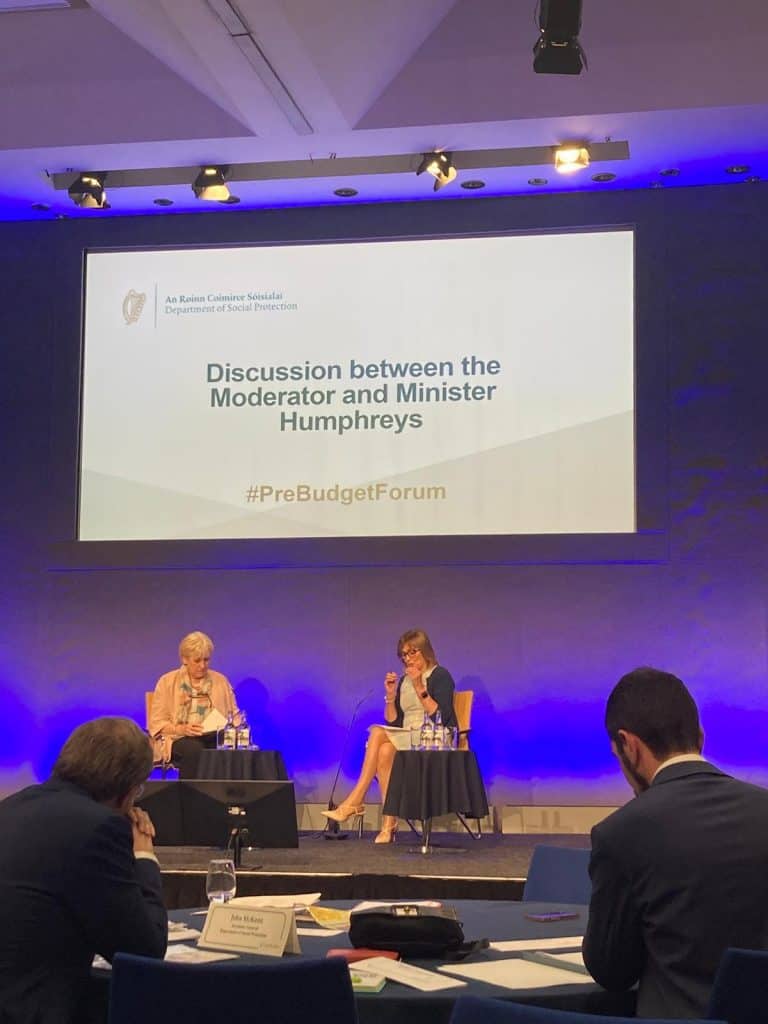
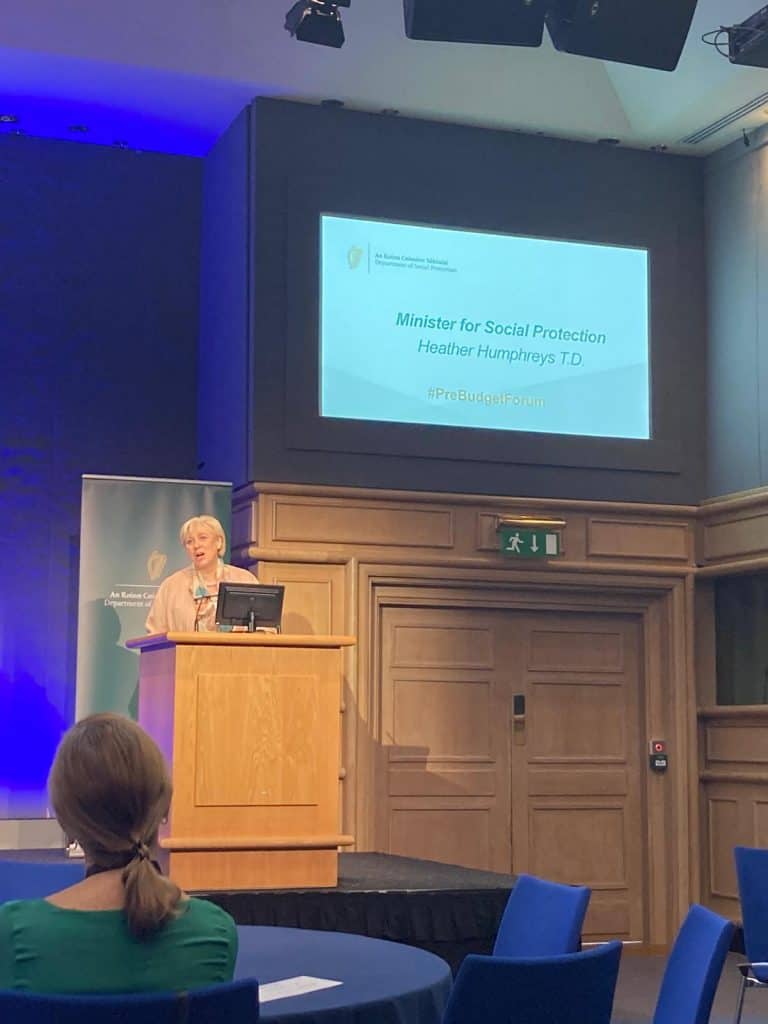
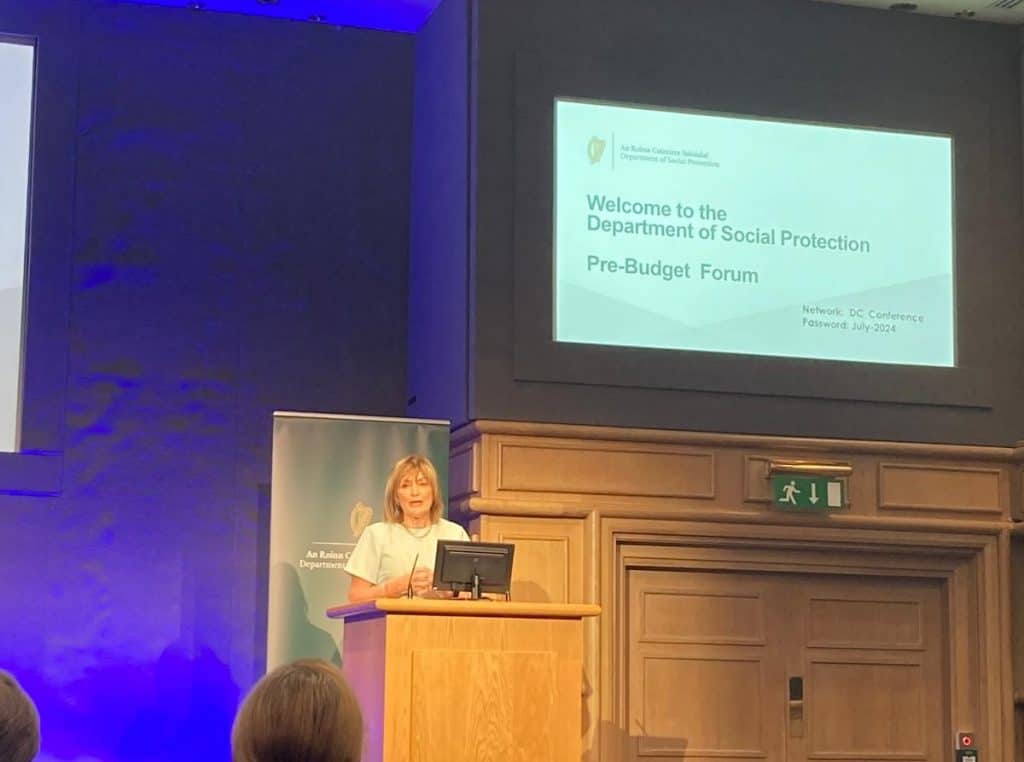
Today marked our annual opportunity to formally speak with Ministers within the Department of Social Protection about the real issues affecting older persons as well as what is most needed in Budget 2025. Welcomed by the wonderful Mary Kennedy, we were treated to an interesting welcome address by Secretary General, John McKeown. He reflected on Ireland’s changing population and cultural landscape while also addressing the well-known fact that our population is ageing. The Secretary General praised the work of the many thousands of people who have immigrated to Ireland and contributed to our society in a positive way. Following this, he expressed the importance of immigrant workers especially within the caring field and suggested that they will be the ones who will be looking after us when “we’re old and decrepit”. We wondered if other colleagues present, working within the age sector, also shared the same worry that this government appears to continue treating our ageing population as a burden.
Secretary General did however reference that this Government “must not react but rather reflect and take action” for the future. He noted that rural depopulation is still in existence which the ISCP have seen, with our older people getting left behind. This point also came up when we broke into our workshop groups to discuss the topic ‘Supporting Retired & Older People’, led by Collum Walsh and Simon Shevlin. This was particularly in reference to pensions, the Living Alone Allowance, Fuel and Cost-of-Living Allowances. We expressed the need for a substantial increase in each of the above as 1 in 10 older persons are living close to the poverty line. We also campaigned for the implementation of benchmarking the state pension and other social supports at 34% of average earnings which was done so in solidarity with all of the Age Sector organisations at the table.
Eligibility criteria, means-testing and income thresholds were also discussed with almost 30% of our members declaring that means-testing social welfare payments had the most negative impact on their financial security. Representatives from each NGO or charity had examples of people being unfairly assessed for much needed supports or being refused one payment because they are not in receipt of another. We expressed the many reports of members who lost their medical card since the €12 pension increase last year expressing the need for more in-depth and transparent cross-departmental communication. Mr. Walsh assured us that each year there is a change to the pension rate, the Department of Health are informed meaning that this error may in fact lie with the Dept. of Health.
Issues with the Qualified Adult eligibility, the Carer’s Pension, Savings in Retirement, Fuel Allowance and the Household Benefits Package were also raised. In a short space of time, we each pleaded our case to Department Officials Colum Walsh, Simon Shevlin and colleagues who were very cooperative and attentive. Mr. Shevlin appeared deeply concerned when we raised the issue of the application and implementation of the Free Travel Scheme, in which one of our members was refused entry to the bus. This sparked debate of other instances where Free Travel Pass Holders have been unfairly discriminated against or left to the side to facilitate pre-booked ticket holders first.
A plethora of statistics, reports and real-life experiences were shared with the Department in the hopes that next year’s budget will be the one that makes a lasting difference for older persons. We are aware that Government cannot possibly satisfy every person’s need but the ISCP feel that older persons have borne the financial brunt of the Irish Economy for far too long. It is well and truly time to restore the purchasing power of our state pension to enable older people to plan for retirement and continue to contribute to the Irish society and economy.
If you would like to read our submission to the Department of Social Protection, you can read the full document here:
2025 Pre-Budget Submission to the Department of Social Protection
Vote Smart, Vote Strong: A Hustings for the near Future
General Elections are fast approaching and it is very possible that these will take place before 2024 is out. So, to help voters prepare for these elections in the best way possible, the ISCP have decided to hold a series of hustings around the country to give older people a chance to question their local candidates before making the all-important decision; Who am I going to vote for?
What are hustings?
Hustings is a panel discussion in the run-up to an election where candidates debate policies and answer questions from the audience. It’s also a great way to secure commitments from candidates, while building relationships with your potential elected representatives. Hustings usually feature candidates from all major parties and are held in the area where the candidates are standing for election. They’re a great way to find out more about where your candidates stand on key issues and to secure commitments which you can later use to hold them accountable, if elected.
How does it work?
The ISCP will host the event, inviting the electoral candidates from the areas we will be visiting. Candidates will sit at the front of the room and are given the opportunity to make an opening statement and then answer questions from the audience with the potential opportunity for candidates to make a closing statement.
Who is it for?
In short, this if for anyone in Ireland who is registered to vote and wants to find out more about each candidate and what they promise to do achieve if elected to Government. We specifically encourage older people to attend these events and ask questions that are most important and relevant to them. It is also imperative to note that candidates should never be guaranteed your vote just because they belong to a specific party or because your family and earlier generations always voted the same way. This is why these Hustings are so beneficial to voters, because the voter gets to directly question each candidate and can decide for themselves if they are worthy of forming part of our government.
Where will we go?
Well, that is up to you. If there is a large hall or event space in your area and more importantly, a large audience of older people who are keen to make an informed decision about our next Government, please get in touch with us.
The ISCP endeavour to give voice to older people in matters such as this and wish to provide as much information to older generations as possible. We want to remind the Government that we are;
Retired Workers – NOT Retired Voters
