
News
Disappointment in ‘New’ Payment
Pension Rights
‘This is yet another example of a lack of planning and a lack of awareness of the reality of the cost of ageing, which unfortunately we have become used to with this government’ says Sue Shaw CEO of ISCP.
The Government this week, announced a ‘new payment’ for people who are compelled to retire at 65 years but cannot access their state pension until 66 years. This payment of €203 is €45 less than the State pension. The ISCP views this as a disjointed response to a situation that each of the Government partners has been aware of for some time now. Our ageing demographic is not a new phenomenon, so a response of this nature is disappointing at best. The state pension supports people to live just above the poverty line and the lack of any increase over the last two Government Budgets has resulted in many people managing on a payment that is inadequate.
To create a new payment which is €45 less than this, lends to the belief among many of our members and older people in general that this Government has no understanding of what it is to live on a basic payment and furthermore shows a total lack respect for older people who have worked all their lives and continue to be active contributors to their communities and to society in general.
IRISH SENIOR CITIZENS TELEPHONE ANNUAL PARLIAMENT CONFERENCE
OLDER PEOPLES RIGHTS


STAFF PREPARING FOR FIRST EVER TELELPHONE ANNUAL PARLIAMENT MEETING
RIGHT TO VISIT
Delegates attending the Telephone Annual Parliament Meeting (TAPM) of the Irish Senior Citizens Parliament today were concerned about many issues affecting them and their families.
There was concern about the fact that no increase in the basic State Pension for the 2nd year in a row. The state of the Health Service was also a major issue with many feeling that there is some promise of alleviation or to use another phrase “Light at the end of the tunnel” with the news that a vaccine is showing great promise and maybe available soon.
However, the issue that was most poignant and distressing for those attending was the situation with regard to Older People in Nursing Homes and the fact that they are denied the right to have a visitor except through a window.
This is a key issue for Older People living in Nursing Homes and their families, according to CEO Mairead Hayes. Speaking after the meeting, she commented ‘Older people have been particularly affected by the Covid-19 pandemic and none more so than those living in Nursing Homes. We believe there is a need to revisit this and seek to create a less harsh regime.
She said at the Parliament’s first TAMP, delegates spoke of the fact that Nursing Homes are just that, HOMES to the many older people who live there and are not INSTITUTIONS.
When a person enters a HOME they do not surrender their RIGHTS.
The contention is that socialisation and family contact and succour is a Right and must be given to older people and their families.
In particular, people felt strongly about the system of outside visiting and in some cases having to stand in the rain to see their family member. One member spoke of the distressing experience for some families, ‘watching loved ones die through a window’.
It is time to ensure that this matter is addressed as a matter of urgency. The Voice of Older people must be taken account of in this matter.
Budget 2021
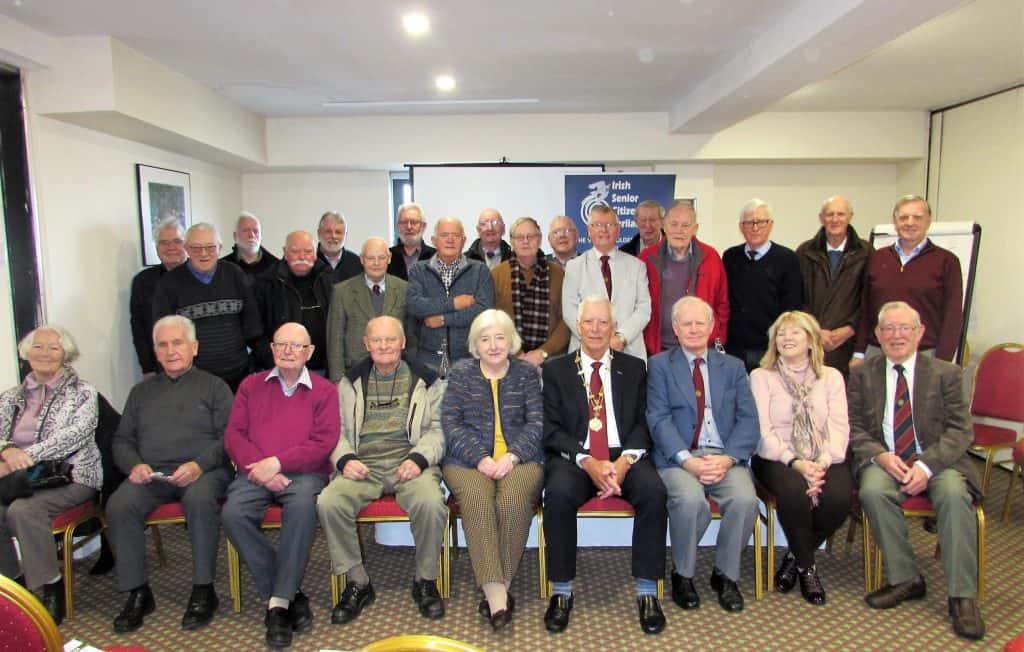
Older People wait in eager anticipation to learn their fate.
What will Budget 2021 Hold for Older People
Many things were promised in the Programme for Government and during Election 2020. Older People will be expecting to see Delivery of some of these promises and a clear pathway or road map for delivery of others.
For most people on State Pensions it is their only means of getting any increase in their income.
If the well flagged increase in Carbon Tax is enacted then there must be an increase in the Fuel Allowance and a speedy start to retrofitting and roll. out of warmer homes policies.
Health Care & the fate of Older People who need help and Care must be addressed as well as a commitment to a Public Enquiry into Covid-19 deaths of Older People in Care Settings.
Take Part in Trinity College Research Survey
Physical Activity Behaviour During The COVID-19 Pandemic: An Online Survey
Physiotherapy researchers at Trinity College Dublin; Dr Cuisle Forde and Dr Emer Barrett are carrying out a study to understand how people’s physical activity and exercise patterns have been affected by the COVID-19 pandemic.This is a general population study and anybody over the age of 18 can take part.
The online survey takes less than 10 minutes and is completely anonymous. We are particularly interested in hearing from older people and males. https://forms.office.com/Pages/ResponsePage.aspx?id=jb6V1Qaz9EWAZJ5bgvvlK7IQjk5x0bZMoogoNQvpznBUM1VDS1U2Vzg2TEIyRkY0WFlBREtYS1A3My4u
Thank you for taking part.
Dr Cuisle Forde & Dr Emer Barrett