
News
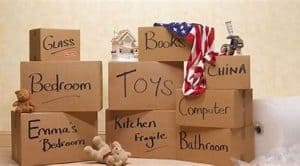
HAVE YOU THOUGHT ABOUT ‘DOWNSIZING?
HAVE YOU THOUGHT ABOUT ‘DOWNSIZING?
Many people as they get older, begin to consider if downsizing would be an option for them. Moving house is regarded by many as one of the most stressful times in your life, but moving from a home that you may have spent many years and raised children in, must add an additional layer of anxiety. So, what makes older people consider this and what is it that needs to be considered before making that final decision. I chatted with one of our members Joan Gorman on what is making her consider this option.
A variety of reasons feed into this choice, some are about quality of life into the future and in some cases, it can be to offer financial assistance to adult children or indeed both.
Joan explained to me “It was to use the equity in my house to give my two children what I call a living will, that is to give them the finances I receive, while I’m still alive”, Joan added, “Inheritance Tax is a really sore point with me, I have worked my entire life paying tax on everything only to be told by consecutive governments that I cannot give my house to whomever I want without them paying more inheritance tax”.
We are all aware the cost of the ongoing upkeep of a house. Much of the larger jobs; painting, and decorating and garden maintenance we could manage when we were younger. Balancing on a ladder, with a paint can is not for the faint hearted, but it becomes more difficult as we age. Many of our members tell us that the cost of ‘outsourcing’ this work can be prohibitive on a pension. Keeping the house warm for ourselves not to mention heating and airing bedrooms not in use, gets harder with the cost of fuel.
Most people, if they make the decision to move, really want to stay in the area they are familiar with. Joan also explained to me “A move is hard but staying near to your GP, chemist and local shops keeps a familiarity that helps with the transition. Being near to their Church and also near enough to visit lifelong neighbours would be important to a lot of people”.
I asked Joan what are the options open to her, if she decides to move. She explained “I live in the Dublin area, at the moment I’ve not been giving any housing options, I’ve been told that when a place becomes available Dublin City Council will be in touch to offer what has become free. I applied two years ago. Last June I was told I am 27th on the waiting list with the person in 1st place having applied in 2005. I have given Dublin City Council two area’s I would prefer. I’m in Dublin City Council area; I cannot apply to South Dublin County Council for senior housing which is ridiculous it’s only a line in the road that depicts which Council you can apply to. I’ve received no information on rent/management fees/car parking spaces. A friend sold her house to Dublin City Council a few years ago, received a one-bedroom apartment which she is paying €50 approx a week. I also have to consider that buying in the open market is not an option, The cost if I sold and bought would not be profitable”.
Not all County Councils offer the option to downsize. This would need to be checked with your local council. For those that do, the requirements may vary. It might only offer this option to past tenants who have ‘bought out’ their home. Some councils do offer ‘private owners’ an option to downsize. Issues to consider and check with your County Council are: Is the value offered lower than the market value; is there a financial contribution required and is there rent and if so, what is the tenancy agreement.
As we all know, the options once you sell and look to buy a smaller property are limited, due to the much-publicised housing shortage. Joan feels “The county is crying out for affordable homes, homes for first time buyers whether to rent or buy. The Irish government know we are an ageing population, 1.3 million approx. over the age of 65 by 2030 (Trinity Tilda Research). I participate in this research. They should be looking more to the future when building houses/apartment. This needs to include senior living within the community that they are building in and to have a constant return of family homes to the market.”
There is a lot of to be considered if you are thinking of going down this road, but many people who make the move are pleased they did so. However, the Irish Senior Citizens Parliament, strongly believe that any policy decision, made by the Government relating to this issue, must not apply pressure to older people to ‘give up their house for a family’. If older people decide to move, it must be their choice and their choice alone.
———————————————————————————————
We thank Joan Gorman for developing this article with us. We also pass our condolences to Joan, on the sad and sudden passing of her son. May he rest in peace.
UPDATE AND CURRENT STATUS OF THE INDUSTRIAL RELATIONS PROVISIONS IN RESPECT OF PENSION ENTITLEMENTS OF RETIRED WORKERS BILL 2021 (THE BILL)

Firstly, the ISCP would like to thank all of our members and member organisations for your ongoing support for this element of our work. We would not have made it to this stage without your support for our email campaign, your engagement with your local TD’s and your support of our awareness demonstrations outside the DAIL.
It is and will continue to be an ongoing piece of work. Legislation is rarely a speedy process. The reasons for this are varied but the lack of support from the Government main parties is a key component in relation to this Bill. An additional cause for delay is the ongoing conflict relating to ‘Speaking Time’. This has delayed the formation of Committees who are charged with working on various topics and policy issues. One of those being the Committee that deals with this proposed Bill.
GIVE RETIRED WORKERS A VOICE
As you are aware, retired workers have endured over a decade of attacks on their pensions, and all are facing further attacks on the very idea of a decent pension when they retire. We believe that pensions are deferred wages, hard won by a long struggle of workers and their trade unions in many cases. But, deals between companies and trade unions can result in significant and long-lasting changes to retired workers pension entitlements. The cumulative effect of this has resulted in a loss of pension income for many retired workers. In some cases, this has led to pension poverty.
The Industrial Relations Provisions in Respect of Pension Entitlements of Retired Workers Bill 2021 (THE BILL) gives a voice to retired workers over what happens to their occupational pension schemes after they have left their employment.
The ISCP has no political affinity to any individual party, however we have a commitment to support our members to have their voice heard by their local and national politicians.
WORK TO DATE:
2021 The proposed Bill (Private members’ Bill proposed by Brid Smith PBP) had wide support within the DAIL and was deferred by the Government for a year to allow for a consultation process to be undertaken.
2022 Submission to consultation process on proposed Bill
Bill passed its second reading in Dáil Eireann on 30th June, 2022.
2023 Bill sent for scrutiny in the first quarter of 2023 as agreed by the Committee on Enterprise Trade and Employment.
Bill passed scrutiny.
Over the period 2021 to date:
Meetings with Minister Damien English, Minister Coveney and Neale Richmond. (awaiting date for meeting with current Minster Peter Burke)
Presentation to TD’s & Senators in AV Room in the Dail
Campaign to move Bill to second stage: Letter, email and in person meetings with TD’s
Awareness gatherings outside the DAIL.
Meeting with individual TD’s & Senators of the Joint Committee responsible for scrutiny of Bill
Prestation to Joint Committee on the need for Bill and to support the Bill’s progression to 3rd Stage
Meeting with Minister Neale Richmond on Bill on response to Questions in the DAIL on the Bill
2024 passed to third stage.
Your representatives from the various organisation within the ISCP have addressed the concerns raised by all Ministers with knowledge, skill and expertise particularly relating to concerns on Industrial Relations issues. The spoke with experience to the current ‘ineffective’ systems in place to address the right of retired workers to have their voice heard.
Note on Bill stages:
There are five stages for all BILLS before the DAIL. This Bill is at 3rd Stage (See 5 stages of Bill at end of this document.)
All Bills that did not complete the legislative process in the Houses of the Oireachtas are deemed to have lapsed, when the 33rd DAIL dissolved In November.
Bills that have lapsed may be reinstated when the new Government is formed. A resolution must be passed in Dáil Éireann for each Bill to restore it to the Order Paper. Bills that are restored to the Order Paper commence at the stage they had reached before the dissolution. The restoration of lapsed Bills to the Order Paper only deals with Bills that have already been published and started the legislative process in the Houses of the Oireachtas. This Bill has been published and has started the legislative process. Bill was passed to Stage 3 before the last Government was dissolved.
Current Status: Awaiting recall of all lapsed Bills before the Dail. Awaiting appointment of all relevant DAIL committees.
This process has been slow due to the ongoing issue over ‘Speaking Time’ in the DAIL.
All parties have been asked to have ready the list of Bills they are requesting for reinstatement. PBP have this Bill at the top of their list. It is they who proposed this Bill through a Private Members Bill by Brid Smith supported by all PBP TD’s. they can now progress it once the Bill is reinstated.
RETIRED WORKERS NOT RETIRED VOTERs
PLEASE CALL ON YOUR TD SUPPORT THE REINSTSTAMENT OF THIS BILL.
WE NEED YOU TO TALK TO YOUR TDS TO ENSURE THIS BILL IS REINSTATED AND PASSED. ASK FOR THEIR SUPPORT TO
- CALL FOR THE REINSTATEMENT OF BILLS
- THEN TO VOTE FOR THIS BILL TO BE REINSTATED ONCE CALLED.
THIS IS CRUCIAL IF WE ARE TO SEND A MESSAGE TO THE CURRENT DAIL THAT OUR MEMBERS DO CARE ABOUT THIS BILL AND THE RIGHTS OF RETIRED WORKERS
Please feel free talk to any one of the representatives from the various organisations and he/she will talk you through ways you can help.
Your Reps:
National Federation of Pensioners Associations: John Nugent @ nugentjohn78@gmail.com
ESB Retired Staff Association: Tony Collins @ tonycollins6952@gmail.com Irish Senior Citizens Parliament: Sue Shaw @ 083 8612179 susan@seniors.ie
Retired Aviation Staff Association: Eileen Sweeny@ rasadub@gmail.com/ Paddy Fagan pj.fagan@yahoo.com
RTE Retired Staff Association: Tony O Connor @ tonyjoconnor@gmail.com
————————————————————————
FIVE STAGES OF A BILL
First Stage (This proposed Bill past this stage)
On First Stage the Bill is initiated. There are two methods of initiating a Bill, introduction and presentation.
“Introduction” is the method used to initiate Private Members’ Bills. Government Bills are initiated by way of presentation; this means a Bill can be published without the prior permission of the Houses.
Second Stage ( This proposed Bill past this stage)
On Second Stage, the general principles of the Bill are debated. Second Stage of a Bill is a debate on the motion “That the Bill be now read a Second Time” and provides Members with an opportunity to discuss the general principles of the Bill, what the Bill contains and what might be included in a relevant way.
THE BILL HAS COMPLETED AND PASSED THESE FIRST TWO STAGES
BEFORE THE DAIL WAS DISSOLVED THEY VOTED TO HAVE THE BILL PASS TO THE THIRD STAGE
We Await the Bills office to set the date for reinstatement of Bill at this point and begin the work of the third stage
Third (Committee) Stage
Third Stage, which is also called Committee Stage, involves detailed consideration of the Bill, with separate decisions on each section and each amendment.
Committee Stage is usually taken in a select committee of the Dáil and a committee of the whole Seanad. Some Bills, generally urgent Bills or those affecting a number of Departments, may be examined in a committee of the whole Dáil.
Fourth (Report) Stage
On Fourth Stage, which is also called Report Stage, amendments arising out of or dealing with issues discussed on Committee Stage are considered.
Fifth (Final) Stage
On Fifth Stage, the Bill is passed by the House. It is a relatively short stage when the House reviews and accepts the Bill, and there is usually little general contribution.
When the Bill passes all Stages in one House it is then sent to the other House for the same process to be repeated. The House in which a Bill is initiated is known as the “First House”, with the other House being known as the “Second House”. Where the Second House makes amendments to a Bill, the amendments are returned to the First House for its agreement.
FIVE STAGES OF A BILL
First Stage (PASSED)
On First Stage the Bill is initiated. There are two methods of initiating a Bill, introduction and presentation.
“Introduction” is the method used to initiate Private Members’ Bills. Government Bills are initiated by way of presentation; this means a Bill can be published without the prior permission of the Houses.
Second Stage (PASSED)
On Second Stage, the general principles of the Bill are debated. Second Stage of a Bill is a debate on the motion “That the Bill be now read a Second Time” and provides Members with an opportunity to discuss the general principles of the Bill, what the Bill contains and what might be included in a relevant way.
WE HAVE PASSED THESE FIRST TWO STAGES
BEFORE THE DAIL WAS DISSOLVED THEY VOTED TO HAVE THE BILL PASS TO THE THIRD STAGE
We Await the Bills office to set the date for reinstatement of Bill at this point and begin the work of the third stage
Third (Committee) Stage
Third Stage, which is also called Committee Stage, involves detailed consideration of the Bill, with separate decisions on each section and each amendment.
Committee Stage is usually taken in a select committee of the Dáil and a committee of the whole Seanad. Some Bills, generally urgent Bills or those affecting a number of Departments, may be examined in a committee of the whole Dáil.
Fourth (Report) Stage
On Fourth Stage, which is also called Report Stage, amendments arising out of or dealing with issues discussed on Committee Stage are considered.
Fifth (Final) Stage
On Fifth Stage, the Bill is passed by the House. It is a relatively short stage when the House reviews and accepts the Bill, and there is usually little general contribution.
When the Bill passes all Stages in one House it is then sent to the other House for the same process to be repeated. The House in which a Bill is initiated is known as the “First House”, with the other House being known as the “Second House”. Where the Second House makes amendments to a Bill, the amendments are returned to the First House for its agreement.
INTERNATIONAL WOMEN’S DAY
Demonstrations are planned from Tokyo to Mexico City, to celebrate International Women’s Day, with this year’s theme calling to “Accelerate Action.” This comes at a time where many activists worry that the current political environment may result in a backsliding on many of the rights they’ve long fought for. One in four countries reported a backlash against women’s rights last year, according to U.N. data.
International Women’s Day was first celebrated in the USA in 1909 and internationally in 1911.
While equality for women has come a long way, we still have some key areas outstanding. Political representation is an area that needs to be addressed. In Ireland, of our 160 TD’s only 36 are women, only one in five.
Women still form the largest percentage of those in low paid insecure jobs, they form the majority of people giving care both paid and unpaid. We are all aware of just how inadequate income in this area of work is. Recently, on RTE’s Liveline, we listened to the heart-breaking stories told by people who are still actively caring for a family member but on receipt of their state pension their care’s allowance was cut or stopped.
During the debates in the run up to the last election (November 2024) we heard a lot of discussion on crime and crime on our streets. No doubt, this issue is very important and needs change, however the issue of crime within the home was rarely mentioned. Domestic violence within the home is as much a crime, accounting for more deaths than those though gangland killings. The Gardai receives between 500- 600 calls per week relating to domestic and sexual violence within the home.
All to often women still have no where to go, if they leave the family home due to violence. A housing crisis and with only one third of the required refuges to accommodate women and their children mean that many women stay in unsafe and violent homes.
Yesterday in Nerja, Spain I spoke to a group of older people calling for equal rights for women and I asked what prompted them to engage with this issue. “ Very simple” they said “ women still have not got access to full equality”
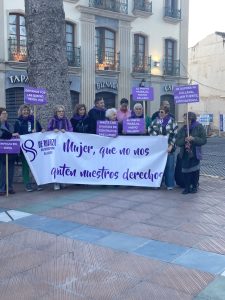
The theme ‘accelerate action’ requires us all to examine how we support equality for women and where we can take action or offer support on a practical level.