News
Joint Committee Hearing on Pensions
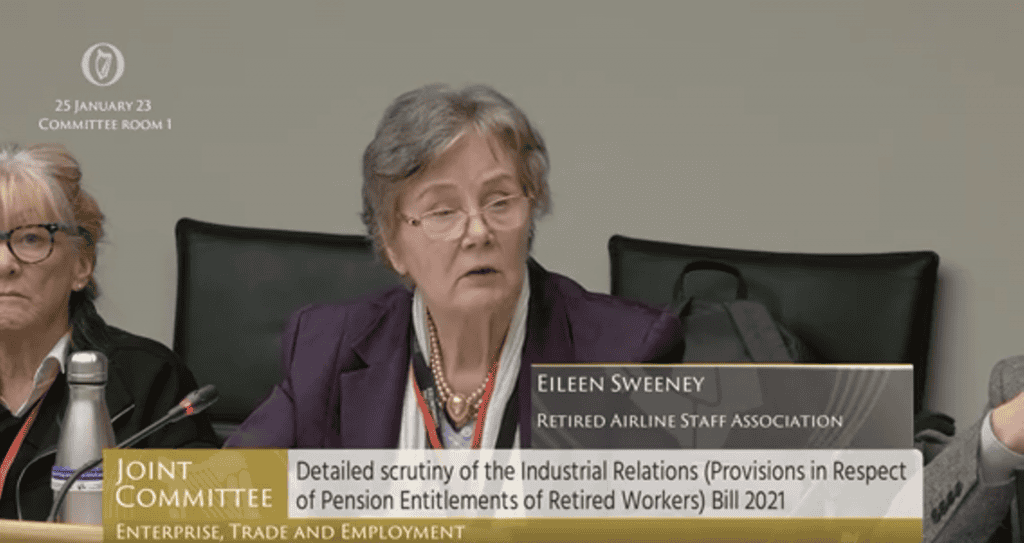
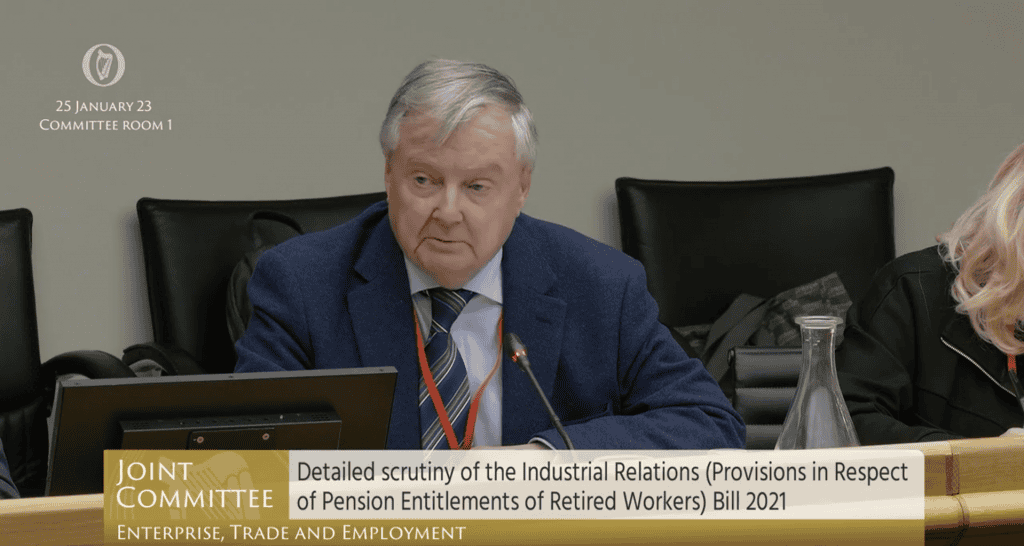
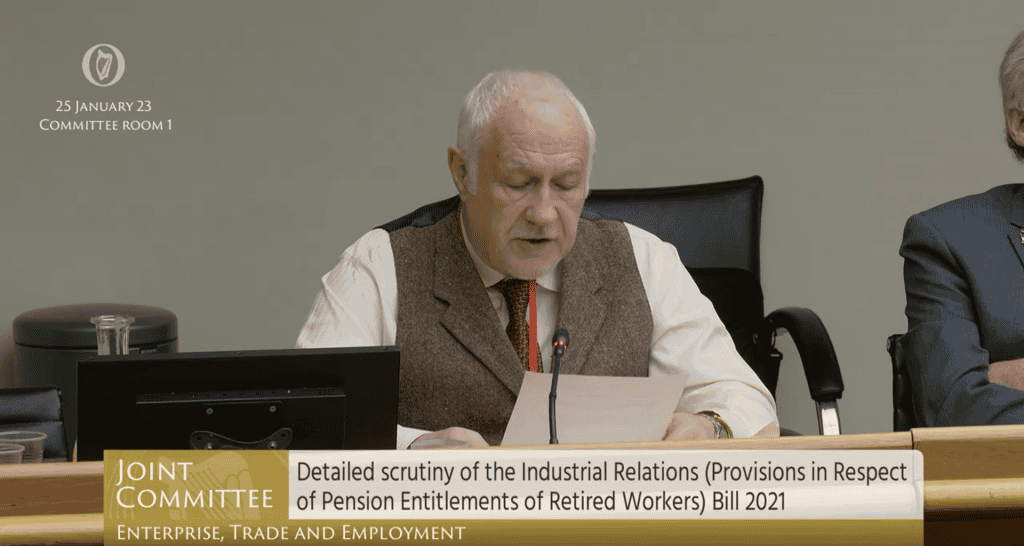
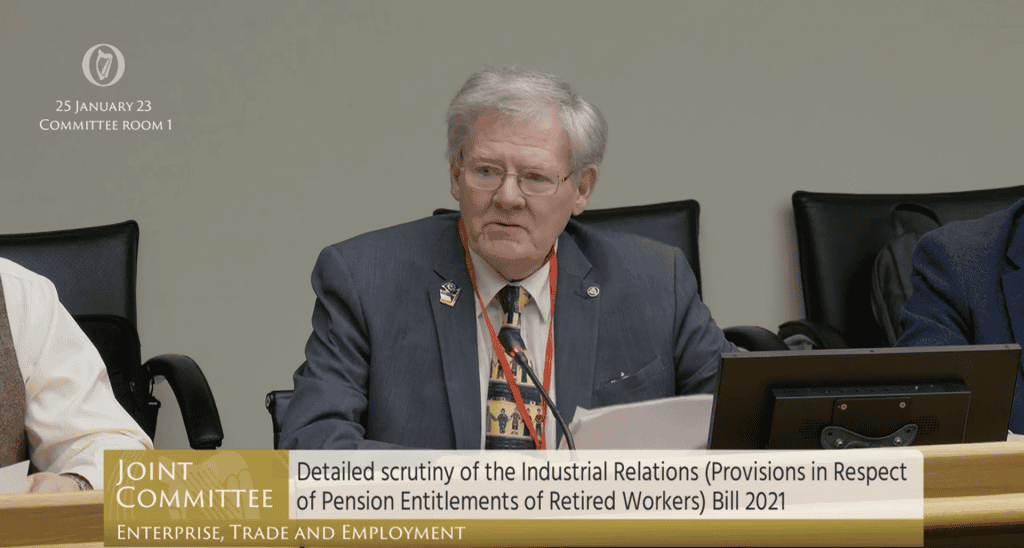
On the 25th of January, the Irish Senior Citizens Parliament headed up a delegation of ISCP members, whom are also retired workers, who presented to the Joint Committee on the Industrial Relations Bill. This bill is in relation to the Provisions in Respect of Pensions Entitlements of Retired Workers.
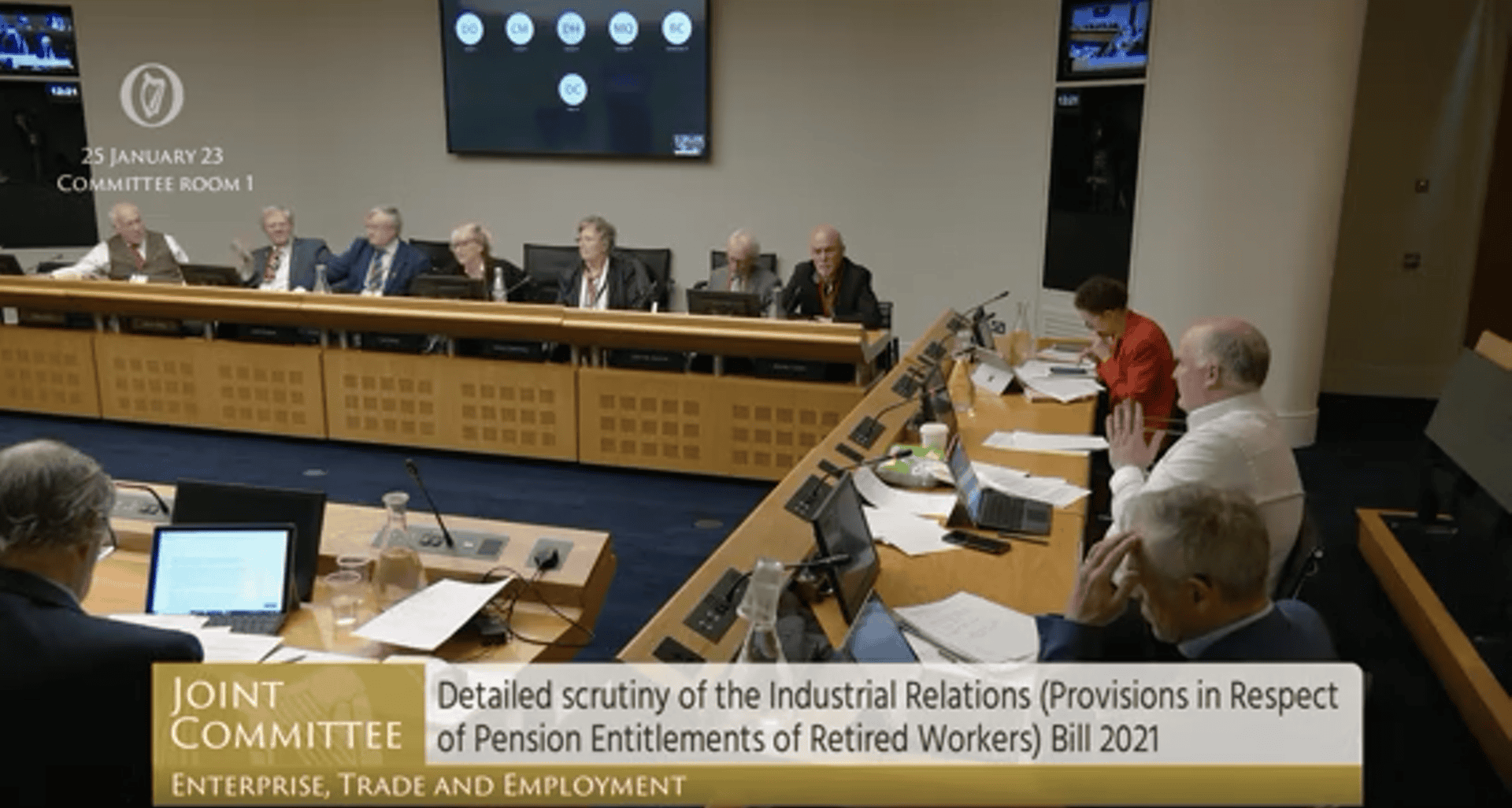
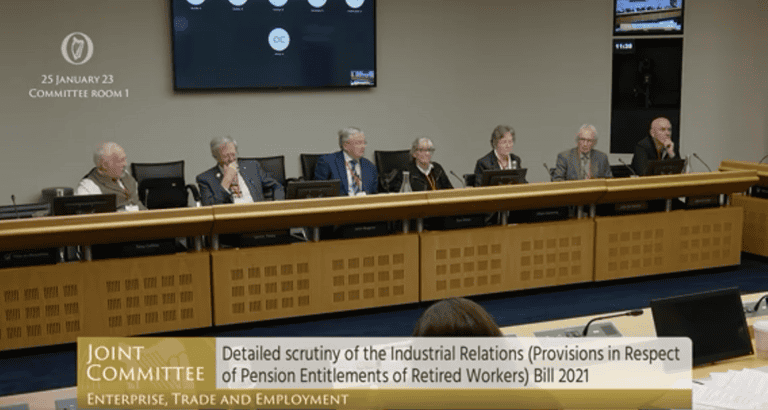
We presented to the Joint Committee, on the inclusion of the voice of retired workers on key decisions relating to their pension income. The Joint Committee is comprised of members from both Houses of the Oireachtas, the Dáil and the Seanad. This is the second stage or detailed scrutiny stage for this Bill and we have a long battle to progress this Bill through the many stages.
However, we are steadfast in our belief that all decisions, regarding the pension income of retired workers, should be decided with their voice and experience being included in the process.
We want to thank those who were in attendance on the day, supporting their peers. We also wish to thank each of the representatives for their excellent presentations and all of their ongoing hard work on this crucial issue.
Telling It Like It Is; Combatting Ageism
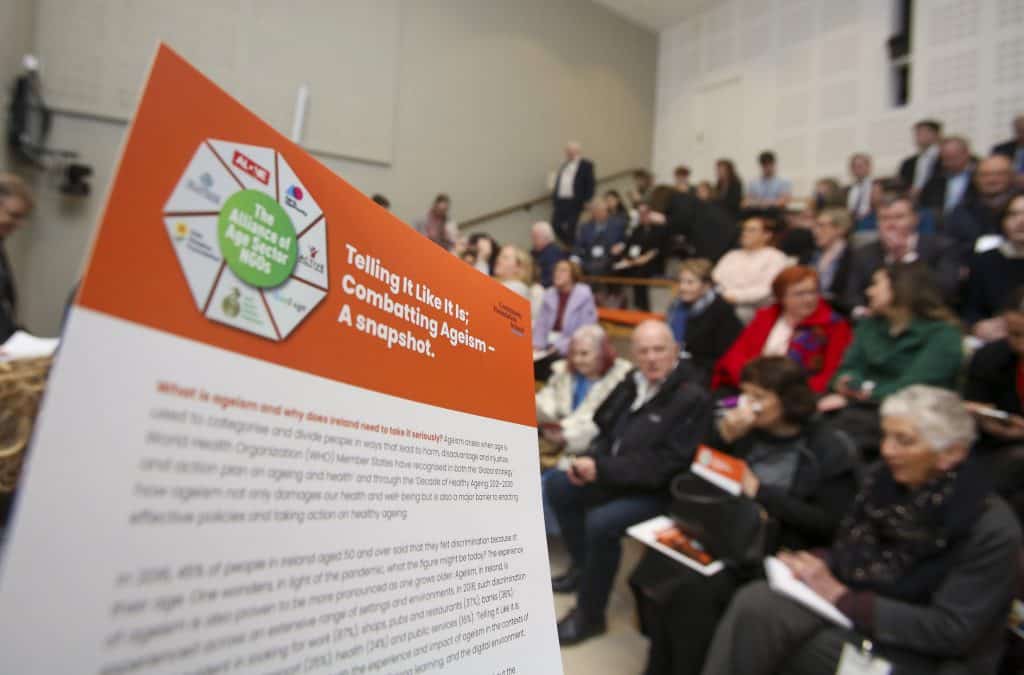
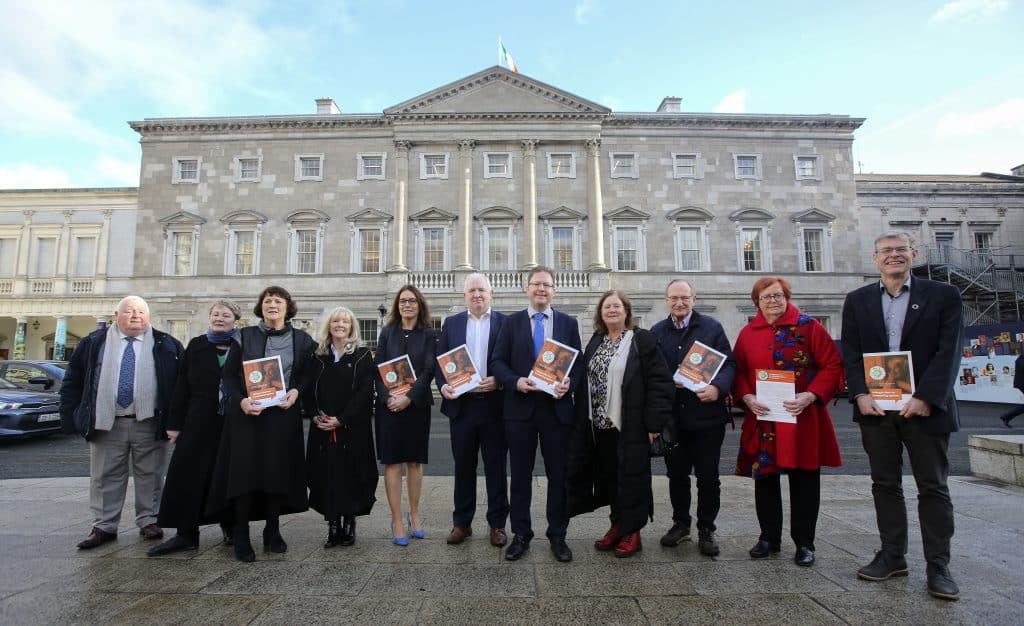
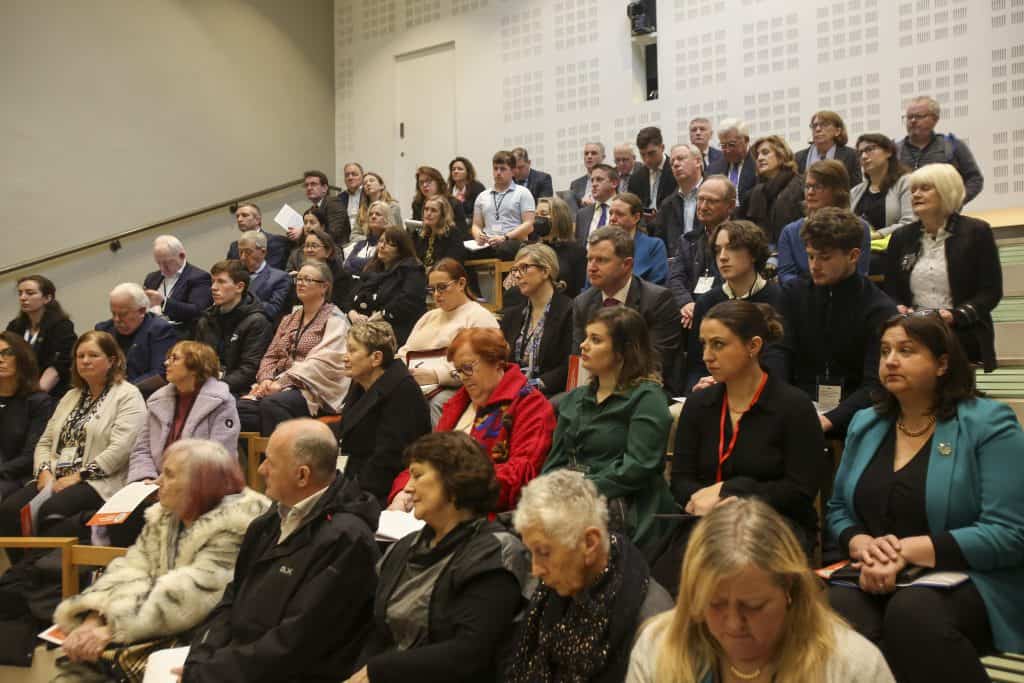
We had a wonderful turnout and discussion at the launch of the Alliance of Age Sector NGOs ‘Telling It Like It Is: Combatting Ageism’ yesterday at Leinster House. We received great support from multiple TDs and Senators along with advocates, ISCP members and friends of the Alliance.
Deputy Ministers Niamh Smyth and James Lawless chaired the event while our own CEO Sue Shaw and ALONE’S Sean Moynihan presented the key findings of the report.
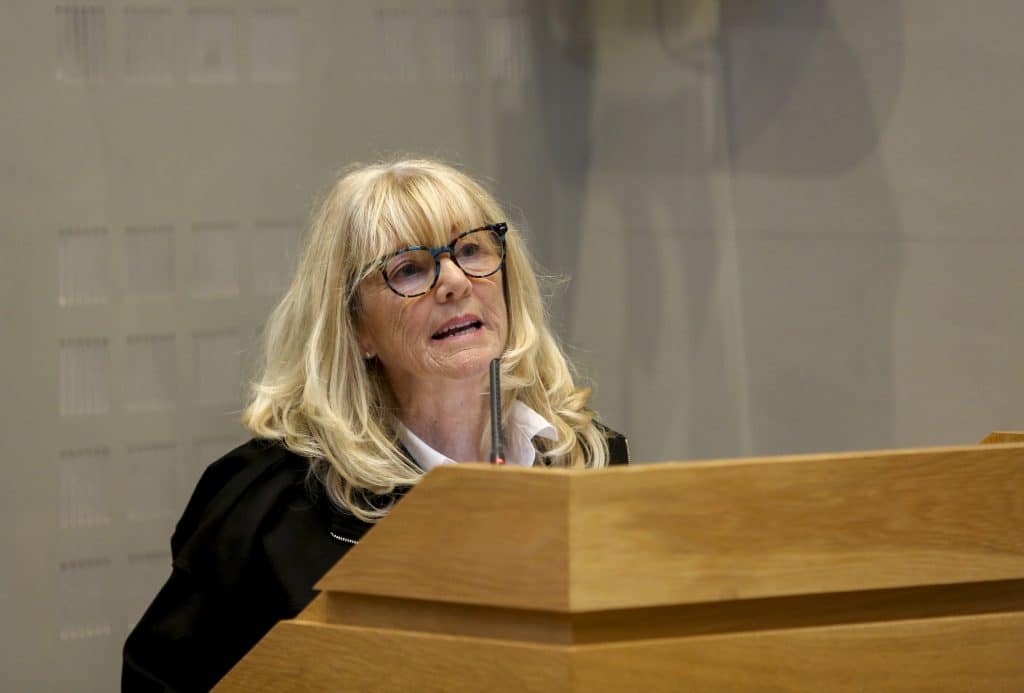
Sue Shaw:
The shared reality is the negative impact ageism has across a range of policy areas. Many reported that they experienced additional ageism in the formation of government policy and
society’s attitudes.Descriptions stories and language that promote later life as a period of unavoidable decline, an ageing society as a tsunami waiting to happen, creates tension and anxiety exacerbated by limited resources. We need to challenge this.
You can read the full report “Telling It Like It Is; Combatting Ageism” HERE.
Alliance of Age Sector NGO’s launching ‘Telling It Like It Is; Combatting Ageism’ next week!
‘Telling It Like It Is; Combatting Ageism’ will be launched at an event for TDs and Senators in the audio visual (AV) room, Leinster House on Wednesday January 25th 2023, 12.30pm – 1.30pm.
The report, informed by the lived experience of older people across Ireland, also sets out a number of practical steps that can be taken to combat the ageism which has such serious and far-reaching consequences for peoples health, well-being and human rights.
Ageism means that older people are often associated more with the past than the future. Ageism refers to the stereotypes (thinking), prejudice (feeling) and discrimination (action) directed towards others or oneself based on age. Not all of it is deliberate; unconscious bias about older people pervades Irish society.

We believe this report should be studied and acted upon by all policymakers. We are looking for TDs and Senators to support this key policy issue through their engagement with the launch on Wednesday 25th January. We endeavor to gain their support and assistance in the meaningful implementation of key policies relating to older people.
The Alliance of Age Sector represents the collective thinking of seven significant NGOs working in the age sector, uniting their learning from working with the diversity of older people and the issues that older people face.
The seven-member organisations are Active Retirement Ireland, Age & Opportunity, ALONE, The Alzheimer Society of Ireland, Irish Hospice Foundation, The Irish Senior Citizens Parliament and Third Age.
Keep an eye on our website and social media (Twitter, Facebook and Instagram) on Wednesday 25th January where we will give you full access to the report and keep you updated throughout the launch.
Unfinished Democracy: Achieving Gender Equality
On the 14th December, the Joint Committee published its final report on Gender Equality after considering the weighted recommendations by the Citizen’s Assembly. The Committee agreed these recommendations should form the foundations for achieving true gender equality in Ireland.
In 2005, the Economic and Social Institute (ERSI) reported that one-third of the population participated in caring activities. This was further broken down by gender; 48% women and 23% men (McGinnity and Russell, 2008).
Although there have been efforts to reduce the gender pay gap, men currently earn approximately one-sixth more than women in Ireland. Inequalities in retirement still remain as women over 65 receive a pension that averages 29% lower than that of men (Eurostat, 2019).
According to Orla O’Connor of the National Women’s Council (NWC):
“This cultural assumption that women are society’s natural carers, coupled with the gender pay gap, also means women predominately fill the gap left by the State’s chronic underfunding of care. We see a Constitutional reform as a way of reframing the value our society puts on care.
Valuing care includes supporting women and men to combine unpaid care with paid employment through better, paid family leave and accessible, affordable, quality childcare.”
Some of the key recommendations include:
- Hold a constitutional referendum in 2023 to insert gender-neutral language, remove text exclusive to women having a ‘life’ and ‘duties’ within the home and ensuring a more inclusive definition of ‘family’
- Commission a ‘cost of care’ review that calculates the financial cost of unpaid care
- Develop and establish a National Planning Unit for Care, to foster better linkages and co-ordination on care policies across all relevant Government Departments
How we understand the nature of care work and the value of care, is pivotal to our society and to women’s equality. If this can be reflected in our constitution, this may also be a positive step towards addressing the increasing care needs of our population throughout our life cycle.
To read the report in full, you can access it HERE.